


Frontier City
4.430.00 Reviews
App Specs
- Version
- 0.8.579
- Updated On
- License
- Free
- Downloads
- 10,000+
- Developer
- CamelStudio
- Categories
- Strategy
- Platform
- Android
Screenshots
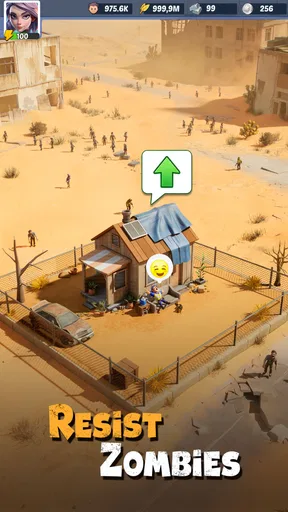

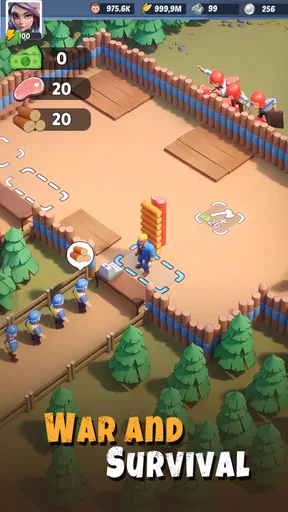
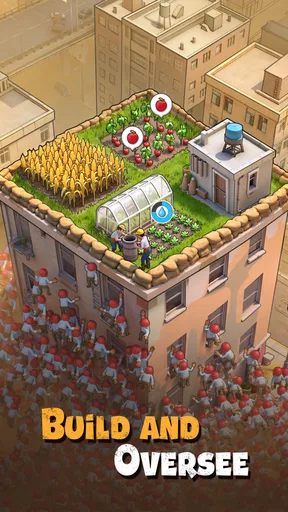
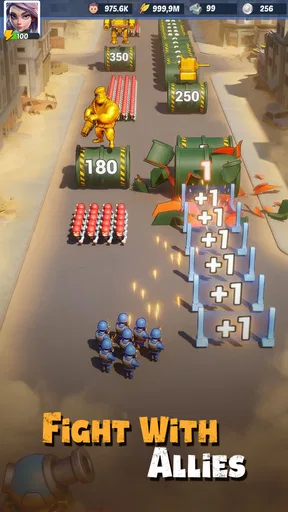
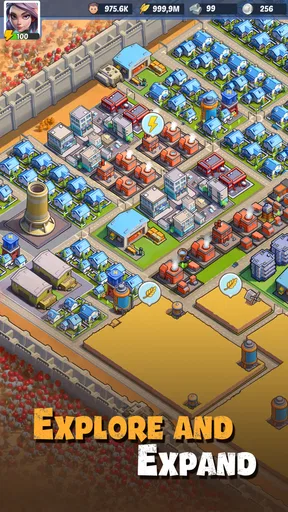
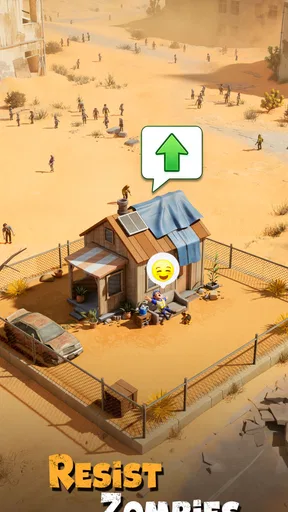

 Analysis by AppCompare
Frontier City caught my attention because it puts a familiar strategy question in an unusually harsh setting: how do I build and manage a settlement while a sea of zombies keeps threatening the edges? After spending time with this free strategy game from CamelStudio, I found that its strongest appeal is not simply the zombie theme. It is the constant pressure created by having to think about growth and survival at the same time.
The game is available for Android devices running version 8.0 or later, and its Teen content rating gives a useful indication of the intended audience. It is not a tiny casual distraction in the same way as a quick puzzle game. Instead, it asks me to make a chain of decisions, watch how those decisions affect the settlement, and return when I want to push the frontier a little farther.
Its current version is 0.8.579, and the game has already attracted over ten thousand installs. A 4.4 average from around three hundred ratings suggests that many players are finding the central idea enjoyable, although that does not guarantee that every player will appreciate the longer-term routine. My own view is that Frontier City is most interesting during the period when every building choice feels important. The harder question is whether that feeling survives after the first wave of discovery.
Why the first week feels more engaging than expected
The opening hours work because the game gives me a clear reason to care about ordinary management decisions. I am not just placing structures for decoration. I am trying to establish a functioning city in a hostile environment, and the zombie threat gives each improvement a practical purpose. Even a modest expansion feels like progress when it makes the settlement appear more prepared for what is outside its walls.
That combination makes the early experience easy to understand without making it completely mindless. I can focus on developing the city, but I also have to keep the surrounding danger in mind. The best early habit is to resist spending every available resource immediately. I found it more useful to pause before each upgrade and ask whether it improves short-term safety, unlocks a more valuable option, or merely makes the city look busier.
The most important early lesson is to treat every upgrade as part of a chain rather than as an isolated reward. A building that looks attractive on its own may not be the best choice if it leaves the settlement unable to support the next essential improvement. This is where Frontier City separates itself from a purely decorative city builder. The zombie setting encourages me to think in terms of resilience, not just expansion.
For a realistic everyday scenario, I could see myself opening the game during a lunch break, checking the city, starting a useful improvement, and leaving before the session becomes a long commitment. Later, I could return with a specific goal instead of wandering through menus. That rhythm suits players who enjoy making a few deliberate decisions throughout the day rather than completing one uninterrupted campaign in a single sitting.
Worth Reading Before You Choose

EA SPORTS FC Mobile 26 Is a Bigger Football Game, but It Takes Time

Flipboard Shows What News Apps Must Do Beyond the Feed

Switching to Android Auto Means Rethinking Your Driving Routine

Google Calendar Makes a Crowded Week Easier to Manage

Ludo King Makes the Most of the Minutes Between Plans

Baby Panda World Brings Quick Play to Modern Phones, but Its Game Library Feels Busy
The first week also benefits from the novelty of seeing the settlement evolve. Early construction has a satisfying sense of direction: the city begins as a fragile outpost, and each improvement makes the frontier feel more deliberate. The setting gives familiar strategy actions a stronger emotional context. Gathering, expanding, and preparing do not feel completely abstract because the threat outside the city is always part of the mental picture.
Still, the opening appeal depends heavily on whether I enjoy gradual progress. Players looking for immediate action may find the management side too measured. Frontier City is not the right choice if I want a fast arcade game, a purely tactical battle game, or a city builder where survival pressure is absent. The game asks me to appreciate preparation, and that can feel slow when I am in the mood for constant combat.
Small decisions that make the opening smoother
My most useful approach was to keep the city compact and purposeful at the beginning instead of expanding simply because space was available. A compact settlement is easier to understand, easier to check, and less likely to make me lose track of what needs attention. Expansion should answer a specific need, not just create a larger map to maintain.
I also recommend setting a single objective before each session. For example, I might decide to improve the city’s ability to support its next stage rather than trying to upgrade everything at once. This prevents the early game from turning into a sequence of impulsive taps. It also makes the return visit more satisfying because I know what I am checking for.
Another useful habit is to judge progress by stability instead of visual size. A larger settlement is not automatically a healthier one. If growth creates more things to monitor without making the city safer or more productive, the apparent progress can become a burden. That trade-off is easy to miss when the game is new and every expansion feels rewarding.
What remains valuable after the novelty fades
The month-to-month question is more complicated. Frontier City has a solid foundation for recurring play because its premise naturally supports repeated planning. A city surrounded by zombies gives me a reason to return, inspect the current situation, and decide what deserves attention next. The lasting value comes from that ongoing relationship with the settlement rather than from the initial surprise of the theme.
However, a strategy game needs more than a good premise to earn permanent space on a phone. It needs a routine that remains satisfying after the basic layout is familiar. In my experience, Frontier City works best when I actively give each session a purpose. If I open it without a goal, the experience can become a maintenance check rather than meaningful strategy.
That distinction matters. A game can be pleasant to revisit while still failing to become a lasting favorite. Frontier City has the ingredients for a dependable daily or occasional habit, but the quality of that habit depends on how much I enjoy incremental improvement. If I like optimizing a settlement, watching gradual development, and making cautious choices under pressure, the game has a credible long-term role. If I need frequent surprises or a strong narrative push, the routine may lose energy sooner.
The game’s free entry point helps with experimentation. I can try the core experience without paying upfront and decide whether the city-building loop fits my taste. At the same time, in-app purchases range from $0.99 to $99.99 per item, so I would approach the store carefully. The sensible way to evaluate the game is to play at my own pace first and avoid treating every delay or limitation as a reason to spend.
That payment structure creates an important trade-off for long-term players. A free strategy game can be convenient, but the temptation to accelerate progress may change how I experience the decisions. If I pay to remove every pause, I may also remove part of the planning rhythm that makes the game interesting. I prefer to regard purchases as optional conveniences rather than as part of the basic strategy, especially while I am still deciding whether the game deserves regular attention.
For players comparing it with traditional city builders, Frontier City offers a more urgent mood. A standard builder may let me concentrate on layout, efficiency, or visual design, while this game makes survival part of the city’s identity. Compared with a direct combat strategy game, though, it is more patient and management-focused. That makes it a useful middle ground for someone who wants danger in the background without turning every minute into a battle.
Who is likely to keep returning?
I think the strongest audience is made up of players who enjoy checking systems, making measured improvements, and seeing a settlement become more capable over time. It is also a good fit for someone who likes zombie fiction but does not want a game that consists only of shooting or frantic defense. The city gives the theme a practical layer: survival is expressed through planning, not just reaction.
It is less suitable for players who dislike waiting between decisions, who want a complete experience in one sitting, or who become frustrated by free-to-play economies. It may also disappoint people expecting a deep, traditional strategy simulation with highly detailed urban planning. Frontier City’s appeal is its accessible mixture of settlement development and danger, not the promise of an uncompromising management simulator.
One of the game’s better long-term uses is as a low-pressure companion activity. I can play it while commuting, between chores, or during a short break, provided I am comfortable with progress that unfolds gradually. It is not the game I would choose when I want to lose myself in a long uninterrupted session. Its value is stronger when I want a small strategic decision to revisit several times rather than one huge challenge to finish immediately.
The maintenance burden behind a growing city
Every persistent city game eventually asks for upkeep, and Frontier City is no exception in the way it structures my attention. The larger the settlement becomes, the more tempting it is to check everything rather than focus on the one decision that matters most. This is where the game can shift from strategy to routine if I am not careful.
I found that maintenance is easiest when I divide it into three questions: what is currently threatened, what improvement has the greatest practical effect, and what can safely wait? That order keeps the zombie pressure at the center of the session. It also prevents me from spending time on low-impact adjustments simply because they are available.
My advice is to avoid treating every notification or available action as equally urgent. A city can feel busy without actually moving forward. By choosing one priority and leaving secondary tasks for later, I preserve the sense that I am directing the settlement rather than responding to an endless checklist.
This approach also helps with phone storage in a broader sense: a game earns its place when it gives me a reason to return, not merely when it gives me something to tap. Frontier City deserves regular space if its planning loop continues to make me think. If my sessions become automatic inspections with no interesting choice, that is a sign to reduce the frequency of play or move on.
The current version number indicates that the game is still in an active stage of development, which is relevant to anyone judging it as a long-term home. A player comfortable with a changing experience may enjoy watching the game develop over time. Someone who wants a fully settled, predictable product may prefer a more established alternative. I would install it with the expectation that the experience may continue to evolve rather than assuming that every part of the design is final.
Where the routine starts to feel tiring
The main source of fatigue is repetition without a fresh decision. Building a city can be satisfying for a long time, but the satisfaction weakens when progress feels like completing obligations instead of solving problems. Frontier City’s zombie premise helps maintain urgency, yet urgency alone cannot replace variety. The game needs each return visit to offer a meaningful reason for attention.
Another possible frustration is the tension between patience and spending. Because the game is free and includes purchases, I need to decide what pace feels fair to me. If I constantly compare normal progress with paid acceleration, the city stops feeling like my project and starts feeling like a transaction. My practical solution is to establish a personal rule before I become invested: either play within the free rhythm or set a modest limit and treat any purchase as a convenience, never as a requirement.
The Teen rating is also worth considering for families. I would not assume that the zombie setting is appropriate for every younger player simply because the game is built around city management. Adults choosing it for a teenager should still consider the horror and survival atmosphere, as well as the presence of in-app purchases. The game may be strategic, but those surrounding elements affect whether it fits a particular household.
Device compatibility is relatively broad because Android 8.0 is the minimum operating system, but compatibility alone does not guarantee that the experience will feel equally comfortable on every phone. Strategy games with persistent cities are easier to enjoy when text, controls, and management screens are comfortable to inspect. I would give the game a short trial on an older device before committing to long sessions, especially if I expect to play frequently.
My long-term verdict on Frontier City
After the first-week excitement, Frontier City remains appealing to me as a focused strategy game with a clear identity. CamelStudio has chosen a setting that gives ordinary city development more weight, and the result is more engaging than a builder that asks me only to make a settlement larger or prettier. The constant zombie threat makes preparation feel meaningful without forcing the entire experience into direct combat.
Its lasting value depends on my relationship with gradual progress. I would keep it installed if I enjoyed returning with a specific plan, checking whether the settlement had become more stable, and deciding which improvement mattered next. I would probably remove it if my sessions turned into repetitive maintenance or if I felt pushed to spend simply to preserve momentum.
The game’s 4.4 average and free price make it reasonable to try, while the Teen rating and optional purchases are important parts of the decision rather than minor footnotes. I would recommend starting slowly, learning the city’s rhythm, and resisting the urge to expand for its own sake. That approach gives the strategy room to work and makes it easier to tell whether the game is genuinely enjoyable or merely new.
My final recommendation is cautious but positive: Frontier City earns a place on an Android device for players who want a zombie-themed city builder with a patient strategic loop. It is not the best alternative for instant action, deep traditional simulation, or a completely frictionless free experience. But for short, purposeful sessions and a settlement that gradually becomes a personal project, it has enough recurring value to survive the novelty period.
In the end, I would judge it by one simple test: after the city is familiar, do I still look forward to making the next decision? If the answer is yes, Frontier City can become a steady habit rather than a brief experiment. If the answer becomes no, its maintenance demands will outweigh its atmosphere. That makes the game neither an automatic recommendation nor a disposable novelty, but a worthwhile strategy option for the specific kind of player who enjoys building carefully while danger waits beyond the frontier.
Pros
- Build and customize a Wild West town with plenty of creative freedom.
- Short tasks make it easy to play in quick sessions.
- A variety of buildings and decorations keeps expansion engaging.
- The western theme gives the game a distinctive visual identity.
- Progression provides clear goals as your frontier develops.
Cons
- Some upgrades and construction timers can slow progress considerably.
- The town layout may feel restrictive as your settlement grows.
- Resource shortages can encourage frequent check-ins or grinding.
- Visuals and animations may feel dated on newer devices.
- Limited strategic depth may reduce long-term appeal for some players.
FAQs for Frontier City
What is Frontier City?
Frontier City is a western-themed mobile game focused on building, managing, and expanding a frontier settlement. Players typically gather resources, construct facilities, complete missions, and develop their town while dealing with the challenges of life in the Old West. Its appeal comes from combining city-building mechanics with exploration, progression, and a colorful frontier atmosphere.
How do you play Frontier City?
Gameplay generally revolves around completing objectives, collecting materials, upgrading buildings, and unlocking new areas or features. You may need to balance resources carefully because construction and improvements often require time, money, or specific items. Missions help guide your progress, while regular interaction with the town and its characters can reveal additional rewards and activities.
Is Frontier City free to download and play?
Frontier City can usually be downloaded at no initial cost, allowing players to try its main features without purchasing the game upfront. However, the experience may include optional in-app purchases for premium currency, faster construction, extra resources, or other bonuses. Check the store listing and payment settings before downloading, especially if children use the device.
Does Frontier City require an internet connection?
Whether Frontier City works fully offline depends on the version and the features being used. Basic activities may sometimes remain available without a connection, but online functions such as cloud saving, advertisements, events, updates, or social features may require internet access. For the most reliable experience, launch the game while connected and review its current store requirements.
Is Frontier City suitable for children and casual players?
Frontier City can be suitable for casual players who enjoy relaxed building, resource management, and western-themed progression rather than fast action. Its age suitability depends on the content rating, advertising, chat or social functions, and in-app purchase options included in the current version. Parents should review those settings and consider enabling purchase restrictions before allowing younger players to use it.


